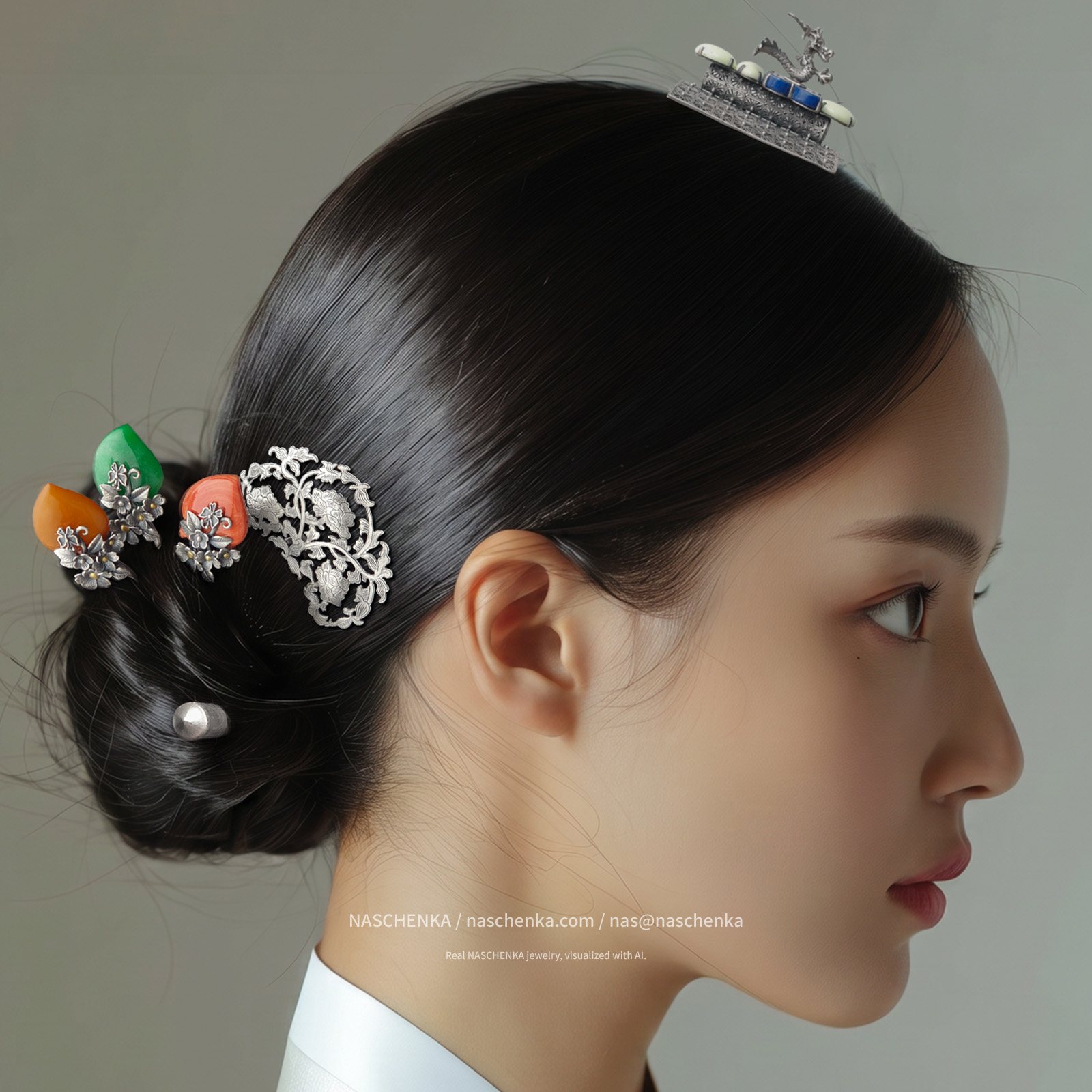
Every historic cheopji has the same body: a horizontal piece about seven to eight centimetres long, with a tail that turns slightly up. What changes is the head. There are three, and they are ranked.
The dragon · yong-cheopji 용첩지
The dragon is the highest form. The Encyclopedia of Korean Culture and the National Palace Museum both give the gilt dragon cheopji to the empress. Because Korea had an empress only in the time of the Korean Empire (1897–1910), the dragon cheopji belongs above all to the last years of the court. The Dictionary of Korean Costume also allows the queen a dragon in gilt or silver.
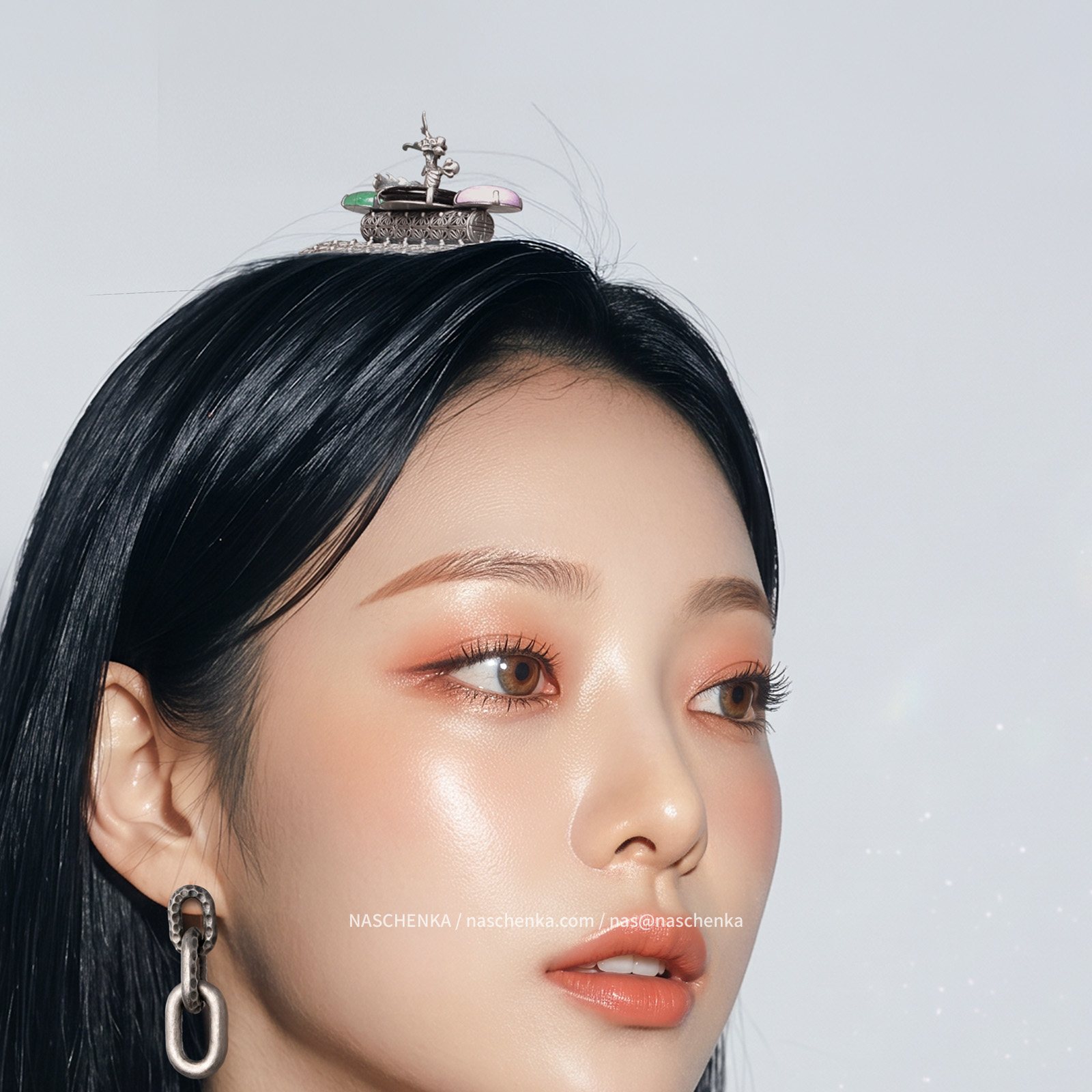
The phoenix · bong-cheopji 봉첩지
The phoenix is the queen's and the crown princess's form, in gilt. The Encyclopedia of Korean Culture gives it to the royal consorts (bi and bin); the National Palace Museum gives it to the queen; the Dictionary of Korean Costume gives it to the crown princess. The phoenix appears across Korean royal women's jewelry — on binyeo, on dwikkoji and on norigae — as the emblem of the queen.
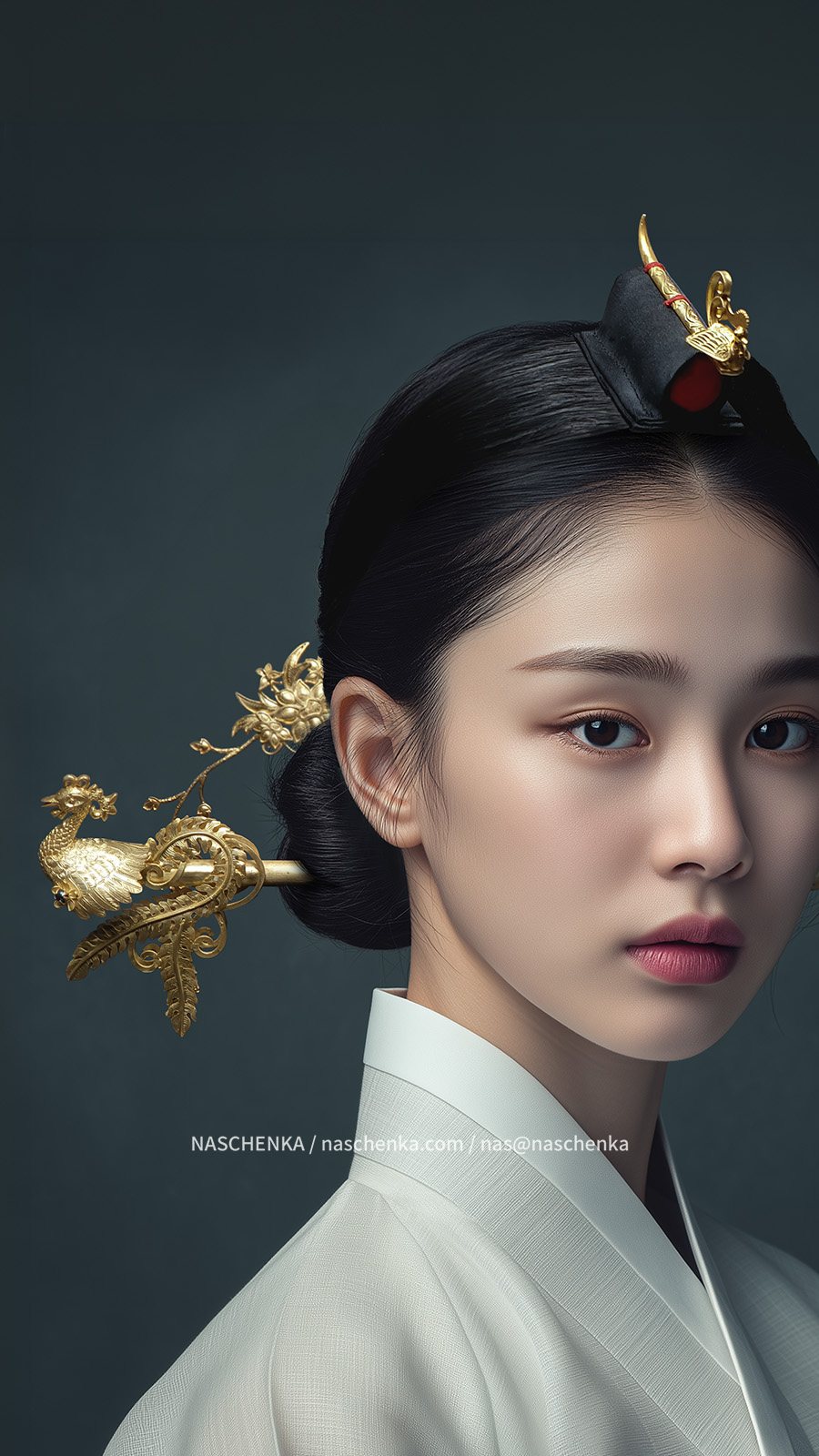
The frog · gaeguri-cheopji 개구리첩지
The frog is the most common form. It was worn by the titled women of the inner court (naemyeongbu) and the outer court (oemyeongbu) and by the court ladies, the sanggung among them. Here the material carried the rank: gilt for higher ranks, black horn (heukgak, 흑각) for lower ones. Some English sources call the frog the cheopji's “common form” for this reason — far more women wore a frog than a phoenix or a dragon.
At a glance
| Form | Rank | Material | Source |
|---|---|---|---|
| Dragon | Empress | Gilt | EKC; National Palace Museum |
| Dragon or phoenix | Queen | Gilt or silver | Dictionary of Korean Costume |
| Phoenix | Queen; royal consorts; crown princess | Gilt | National Palace Museum; EKC; Dictionary of Korean Costume |
| Frog | Titled women of the inner and outer court; court ladies | Gilt or black horn, by rank | EKC; Dictionary of Korean Costume |
Materials
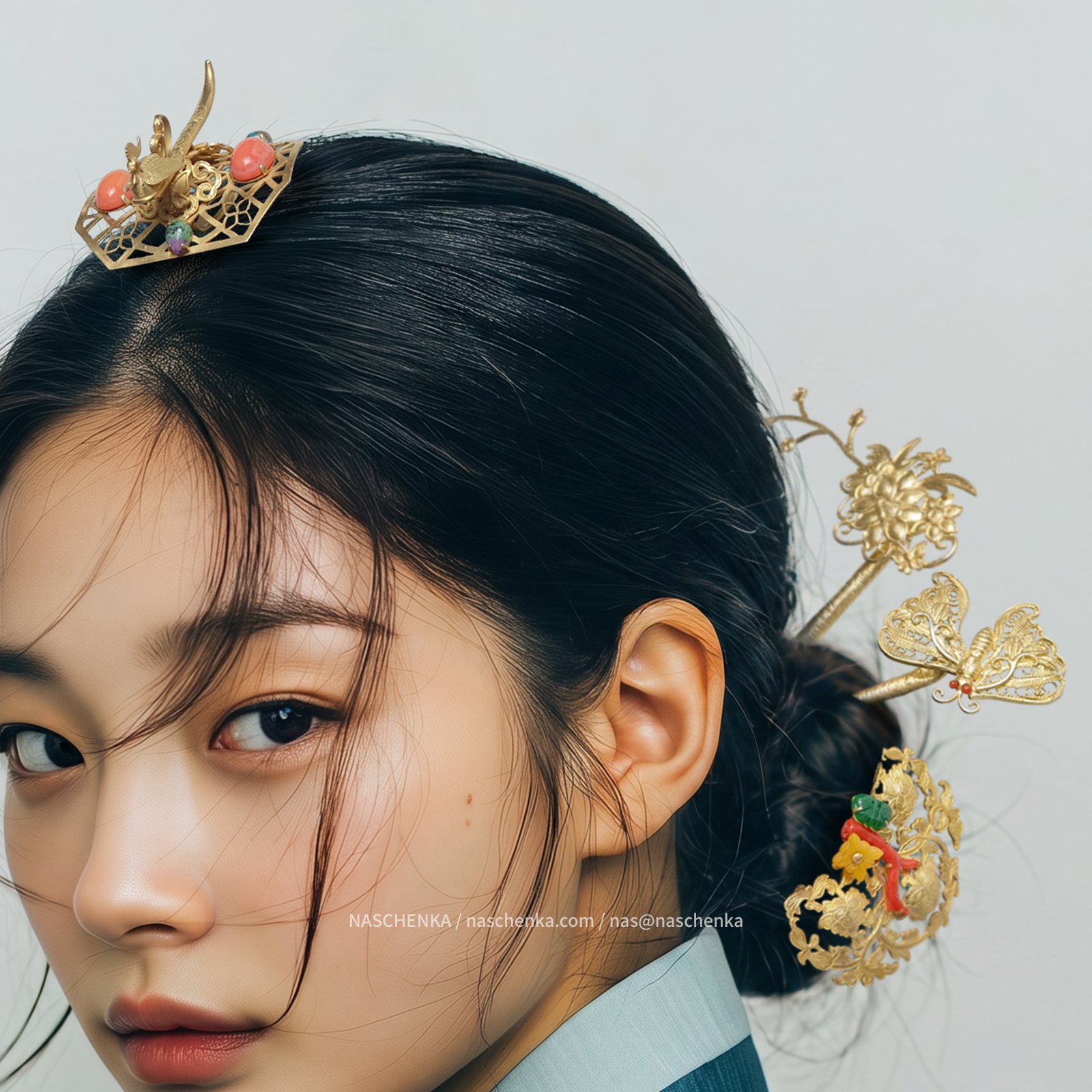
Historic cheopji were made in gilt metal for the highest ranks, in silver, and in black horn for lower ranks. The base is padded and wrapped in black cloth; the thread that ties the body to it is crimson. Later and modern pieces add stones on the base — jadeite, coral, lapis — as Korean jewelry did on binyeo and dwikkoji.
Modern forms
Modern cheopji keep the three heads and the place on the parting, but the base has changed. Many are made in one piece of silver, with an openwork or filigree plate instead of a cloth pad, so that they can be worn on today's hair without long hairpieces. NASCHENKA's No-Gache cheopji, designed by Kim Seong-eun and registered as a design in Korea, takes this furthest: it is made to be worn easily without a gache or hairpieces. NASCHENKA also makes tiara forms inspired by the cheopji. The cheopji today →
References
- Encyclopedia of Korean Culture (한국민족문화대백과사전), “첩지,” written by Son Gyeong-ja, Academy of Korean Studies. encykorea.aks.ac.kr
- National Research Foundation of Korea, Dictionary of Korean Costume (한국복식사전), “첩지,” via Academy of Korean Studies Digital Humanities. dh.aks.ac.kr
- Academy of Korean Studies Digital Humanities, “첩지 (貼只),” citing Kang Sun-je et al., Hanguk boksik sajeon (Minsogwon, 2015), p. 691. dh.aks.ac.kr
- National Palace Museum of Korea, “Phoenix cheopji of the Consort of Imperial Prince Yeong (영친왕비 봉첩지),” via Google Arts & Culture. artsandculture.google.com
- Sookmyung Women's University Museum, “Cheopji Hair Style” (replica), via Google Arts & Culture. artsandculture.google.com
- Yu Hui-gyeong, Hanguk boksiksa yeongu (한국복식사연구), Ewha Womans University Press, 1975.